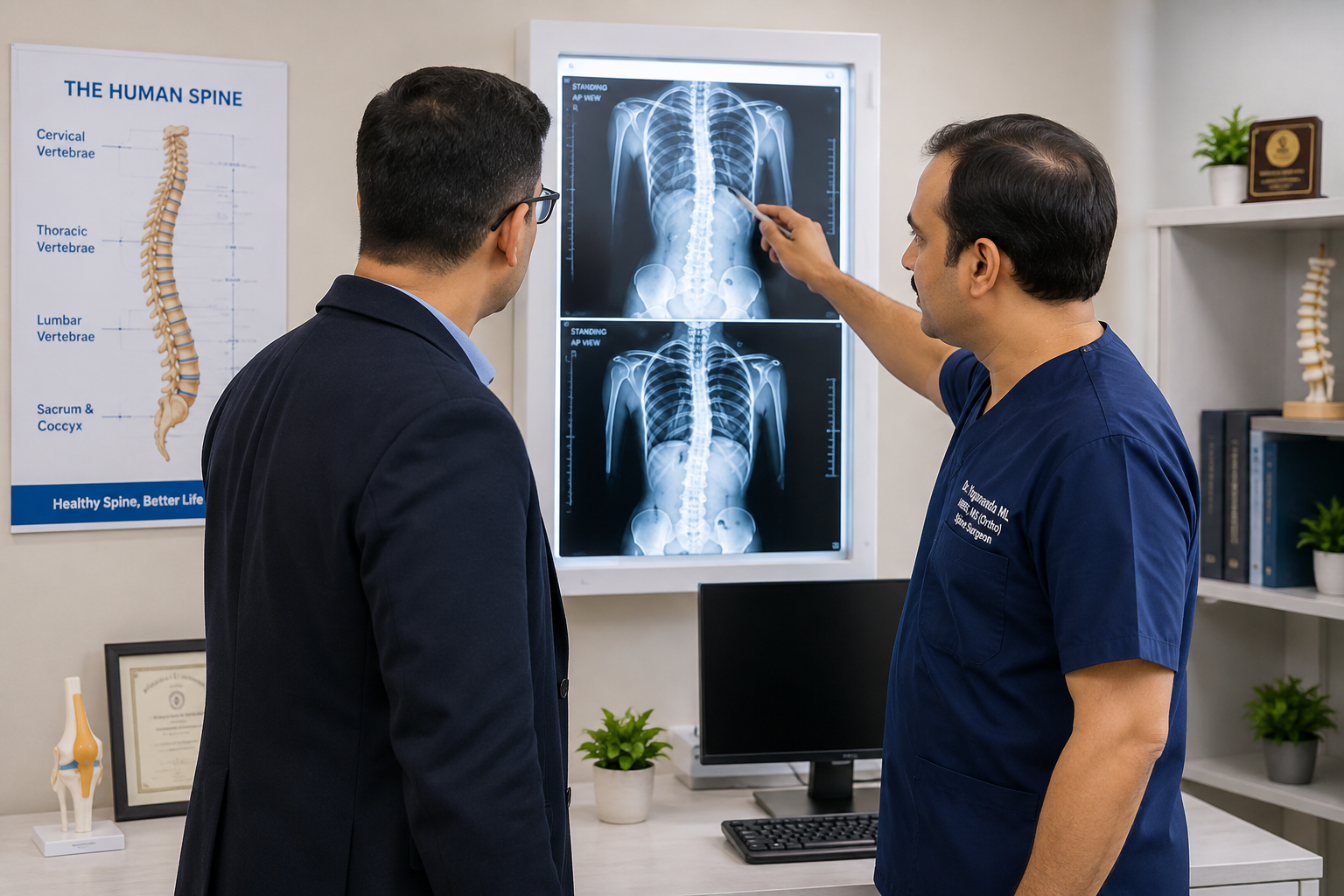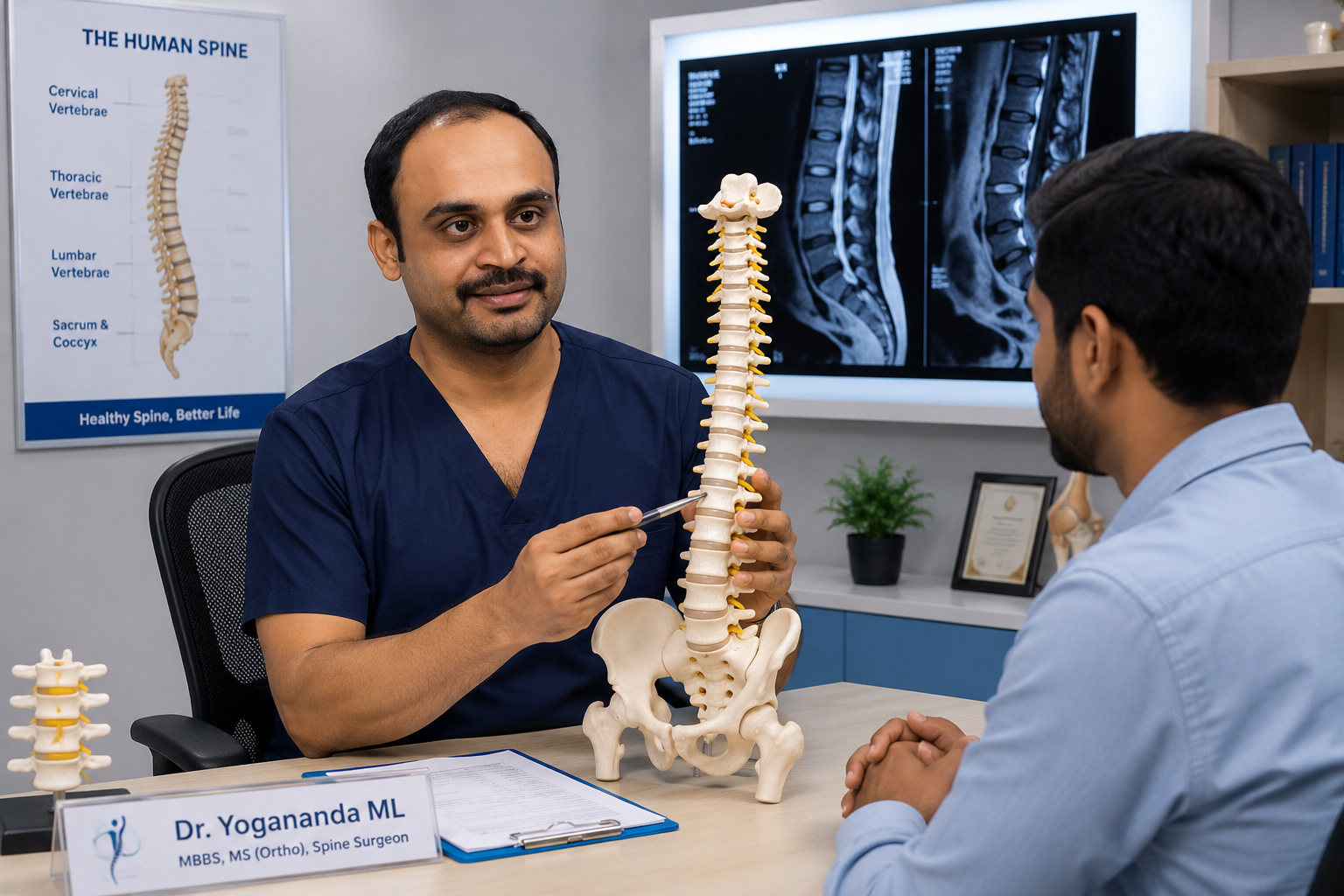
Spine problems are common, but having a spine condition does not automatically mean that surgery is required. Many patients with back pain, neck pain, slipped disc or sciatica can improve with appropriate non-surgical treatment.
The decision for spine surgery depends on the diagnosis, severity of symptoms, neurological findings and how the condition affects the patient’s daily activities.
When can spine problems be treated without surgery?
Many spine conditions can initially be managed with non-surgical treatment. Depending on the diagnosis, this may include:
- Activity modification
- Appropriate medications
- Physiotherapy
- Guided exercises
- Posture and ergonomic modification
- Selected injections or other procedures when appropriate
Treatment should be individualized rather than based only on an MRI or X-ray finding.
When might spine surgery be considered?
Surgery may be considered when there is:
- Persistent severe pain despite appropriate non-surgical treatment
- Significant nerve compression causing persistent symptoms
- Progressive weakness of the arm or leg
- Difficulty walking due to spinal cord or nerve compression
- Significant spinal instability or deformity
- Certain fractures, infections or other serious spinal conditions
Does an abnormal MRI mean you need surgery?
No.
MRI scans frequently show disc degeneration, disc bulges and other age-related changes. Some of these findings can even be present in people without significant symptoms.
Therefore, treatment decisions should be based on the patient’s symptoms, clinical examination and imaging findings together—not the MRI report alone.
Are there situations that require urgent evaluation?
Yes. Seek urgent medical attention for symptoms such as:
- New loss of bladder or bowel control
- Numbness around the groin or saddle region
- Rapidly worsening weakness
- Sudden major difficulty walking
- Severe spinal symptoms following significant trauma
The goal of spine surgery
When surgery is genuinely required, the objective is to address the specific structural problem responsible for the patient’s symptoms—for example, relieving significant nerve compression or stabilizing an unstable segment.
A specialist evaluation helps determine whether surgery is necessary and, importantly, when it is not necessary.
Spine Specialist Evaluation in Mandya
Dr. Yogananda ML
MBBS, MS (Orthopaedics)
FISS – CMC Vellore
Orthopaedic & Spine Surgeon
Shree Krishna Ortho and Spine Care, Mandya
Appointments: +91 88670 34565