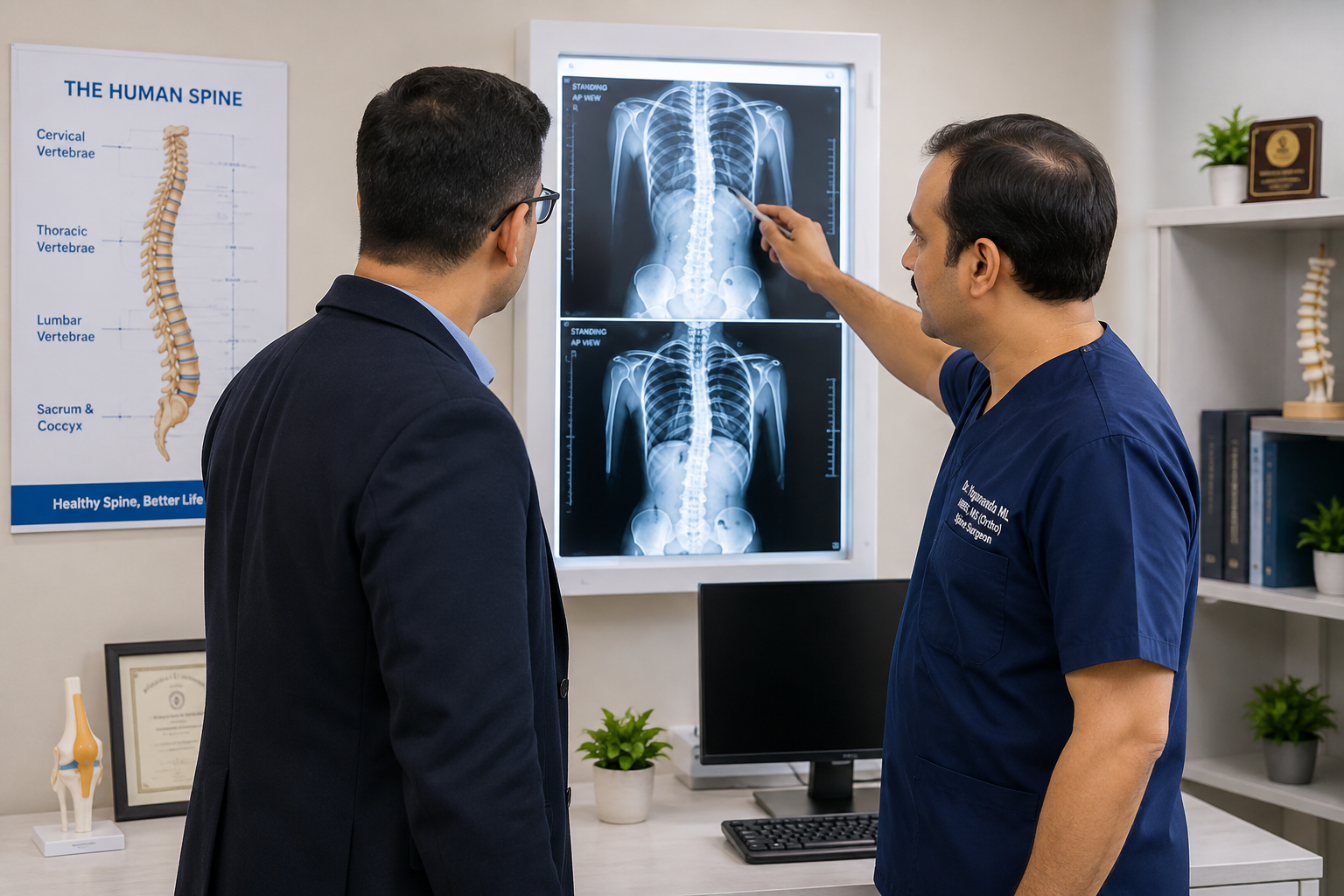
A slipped disc is a common cause of back pain and leg pain. Understanding the symptoms early can help patients seek appropriate treatment and, in many cases, avoid unnecessary surgery.
What is a slipped disc?
The discs between the bones of the spine act as cushions and help the spine move smoothly. When part of a disc bulges or herniates, it may irritate or compress a nearby nerve. This is commonly referred to as a slipped disc, prolapsed disc or herniated disc.
What are the common symptoms?
Symptoms vary depending on the location and severity of the disc problem. Common symptoms include:
- Lower back or neck pain
- Pain travelling into the leg or arm
- Tingling or numbness
- Burning or electric-shock-like pain
- Muscle weakness
- Pain that becomes worse with certain movements, coughing or prolonged sitting
A slipped disc in the lower back can sometimes cause sciatica, where pain travels from the lower back or buttock down the leg.
What causes a slipped disc?
Disc problems are often related to gradual wear and degeneration of the spine. Other contributing factors may include repeated bending or lifting, improper lifting technique, prolonged sitting, excess body weight and sudden strain or injury.
Does every slipped disc require surgery?
No.
Many patients improve with appropriate non-surgical treatment. Depending on the individual patient, treatment may include activity modification, medication, physiotherapy, exercises and other targeted treatments.
Surgery is considered only when clinically appropriate—for example, when symptoms remain severe despite adequate conservative treatment or when significant nerve compression produces progressive neurological problems.
When should you consult a spine specialist?
Consider specialist evaluation when back or neck pain is persistent, particularly when it is associated with:
- Pain travelling into an arm or leg
- Persistent numbness or tingling
- Weakness in an arm or leg
- Difficulty walking
- Symptoms that are progressively worsening
- Pain that is not improving with initial treatment
Urgent medical assessment is important if back pain is associated with new bladder or bowel problems, numbness around the groin/saddle region, or rapidly worsening weakness.
Getting the right diagnosis
Not every episode of back pain is caused by a slipped disc. A clinical examination helps determine whether the symptoms are coming from a spinal disc, nerve compression or another condition. Imaging such as MRI may be advised when clinically indicated.
Treatment should therefore be based on the patient’s symptoms, examination findings and appropriate investigations rather than an MRI finding alone.
Dr. Yogananda ML
MBBS, MS (Orthopaedics)
FISS – CMC Vellore
Orthopaedic & Spine Surgeon
Shree Krishna Ortho and Spine Care, Mandya
Appointments: +91 88670 34565